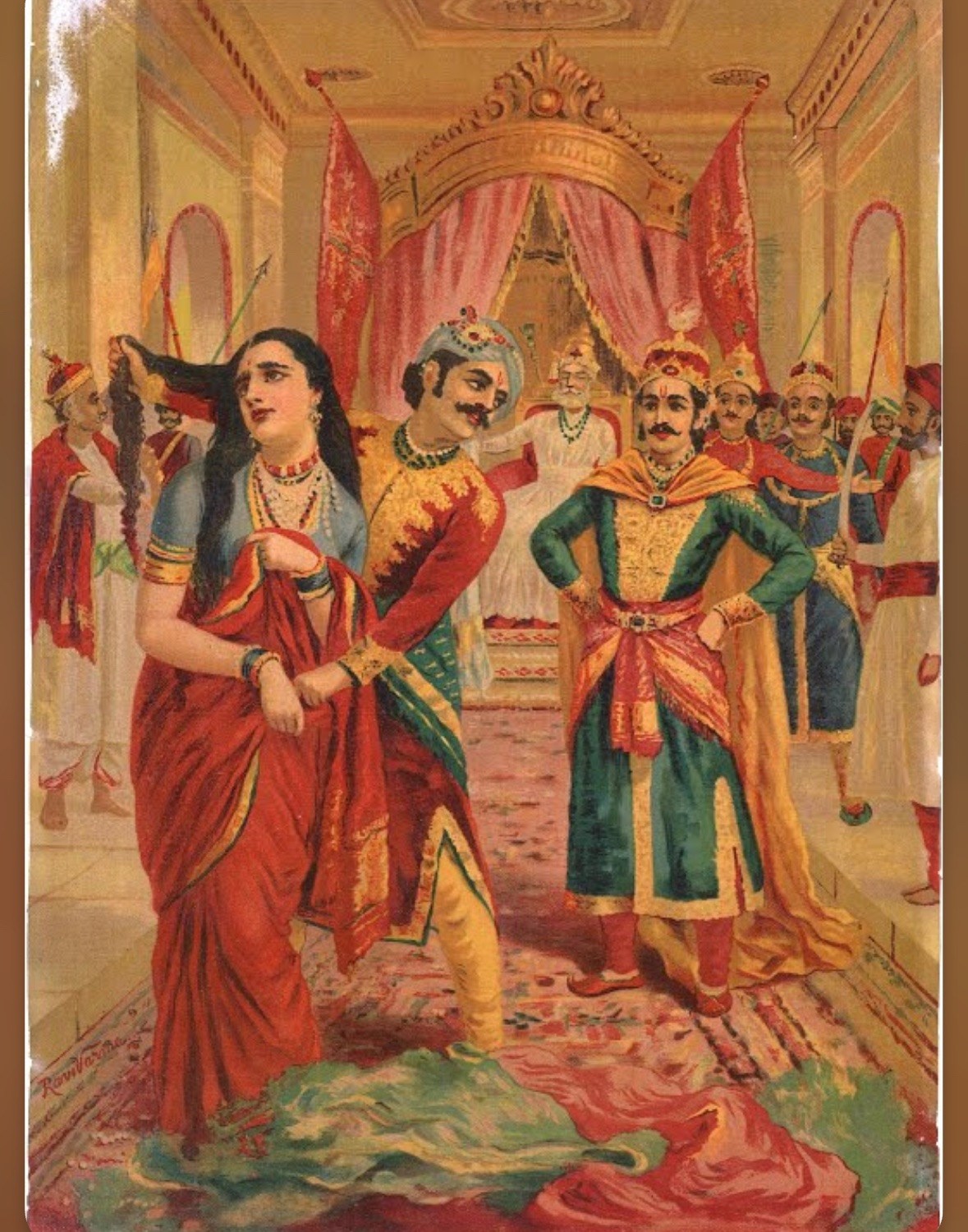
There are 3 prominent female characters that have been wronged among the many in the Indian epics. Shakuntala, Sita and Draupadi.
Shakuntala by a King consumed of lust who discarded her. I don’t care what Kalidasa says, however poetic it may be. Sita by her husband for whom popular opinion mattered more than his own love and faith in his wife. And Draupadi…o my dear Draupadi – firstly wronged by 5 husbands collectively and then wronged by a whole court that conceded over obnoxious arguments.
And for many many years I wondered why Draupadi did not abandon the five. Specially after the court reversed the dice game results and her stupid, incompetent first husband plays a rematch. F***…she should have walked away before the dice were rolled again.
I’ve lived with this discomfort for a long, long time.
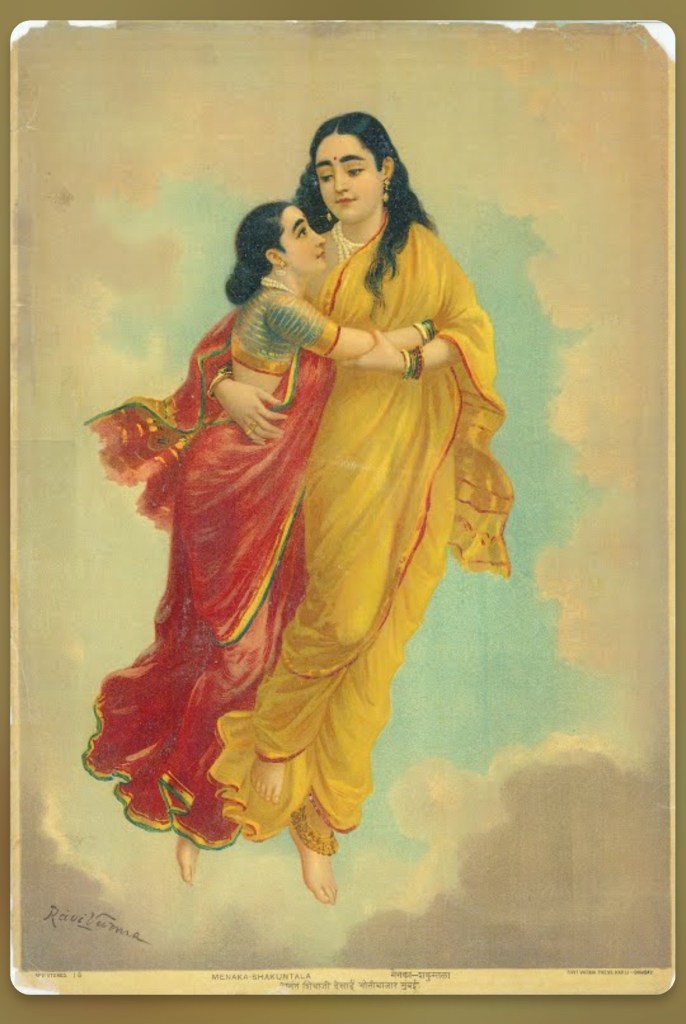
And then recently, in some coffee table book, I saw the painting of Menaka taking Shakuntala along with her to the heavens. And I remembered how Bhoodevi also embraces Sita and takes her away. And while I always knew that Draupadi had no maternal figure; I understood it then. It is because she lacked a mother that she had no escape from being disgraced. Disgraced over and over again.
Menaka is a complicated story of motherhood. But when it perhaps mattered most…when it came to the dignity of her daughter, she shut down the insults and did not urge Shakuntala to adjust, be patient, try again with her love and win over the lusty King. She instead said: You don’t deserve this. You come with me.
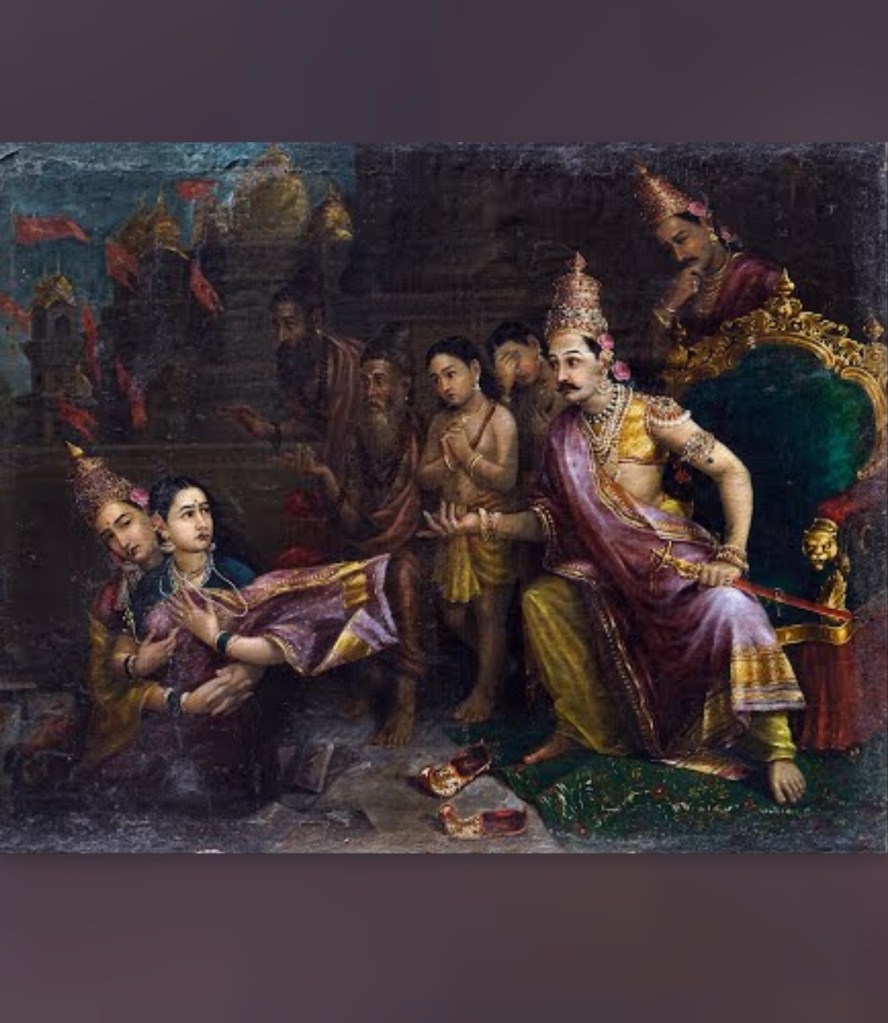
Bhoodevi too did not advise Sita to be tolerant, to prove her chastity one more time, to endure for the sake of the twins. When Sita summoned her and asked her mother to take her away – no judgements, no sermons. She just took her daughter away.
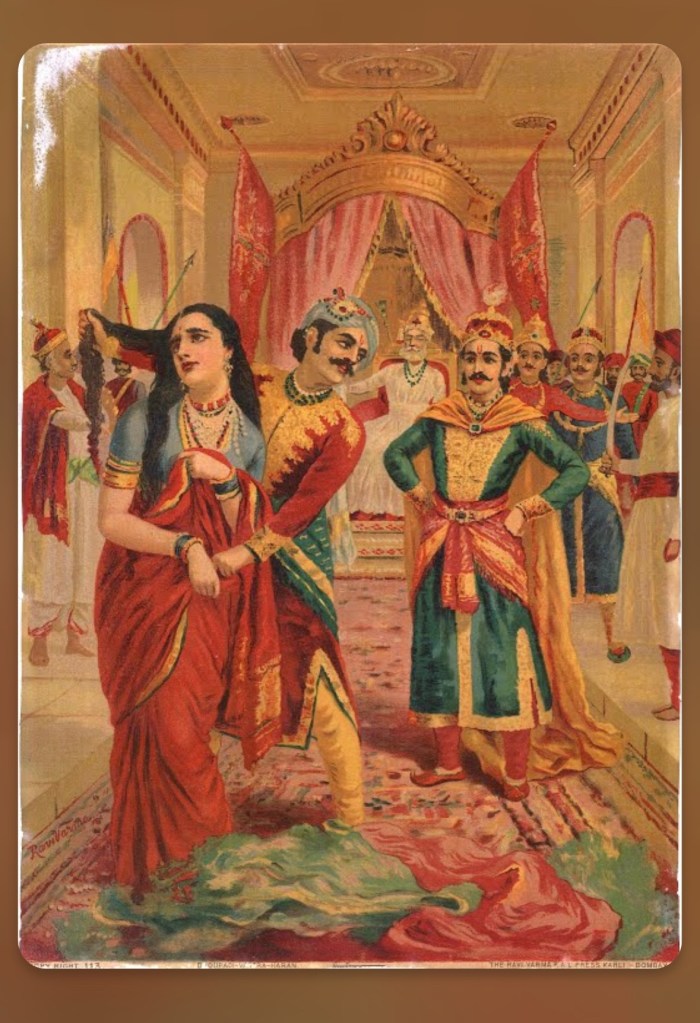
Draupadi. How might the narrative have shaped if she had her mother? Krishna rescues her, momentarily. That’s all.
This Mother’s Day, I want us to think about what we have reduced our mothers into.
We celebrate mothers for their softness. Their patience. Their ability to absorb. We make them saints of endurance, women who gave up their dreams, who cooked through their exhaustion, who smiled through their disappointment so their families could flourish. We build them altars of gratitude and nothing more.
But the mythological imagination, which was older and in some ways wiser than our sentimentality recorded something different.
A mother’s most essential function was not to just nurture in the ordinary sense. It is to be an authority on her daughter’s dignity. The one who shelters her daughter from the world that’s wronged her and stands in defiance and says it in so many words – ‘Don’t you dare!’
So this Mother’s Day, before the flowers and the posts and the gratitude, reflect what you are actually celebrating.
As a daughter it may be hard to judge our mothers dispassionately. But as mothers of daughters, let’s honestly ask ourself if we are the women who are teaching our girls to absorb or are holding the exit doors open for them?

