This year, as Vijayadashami and Gandhi Jayanti coincide, we are perhaps invited to deliberate on how civilizations imagine the end of evil.
Evil and violence are primal in nature. In an age so distant that it has become myth, the only way to rid the cosmos of Mahishasura’s arrogance was through Durga’s annihilation. Rid being the operative word. Rid not eradicate, for even destruction does not erase the possibility of evil’s return.
It took millennia of human consciousness with many seers laying a path and for someone like Gandhi to mass institutionalise a counter-intuitive path: non-violence as resistance. It was not without guilt, not without lives lost, not without the burden of suffering. And yet, it was a refusal to mirror the very violence it opposed.
In choosing non-violence, one does more than resist; one dares to shape the future, to create an environment where evil finds hostility.
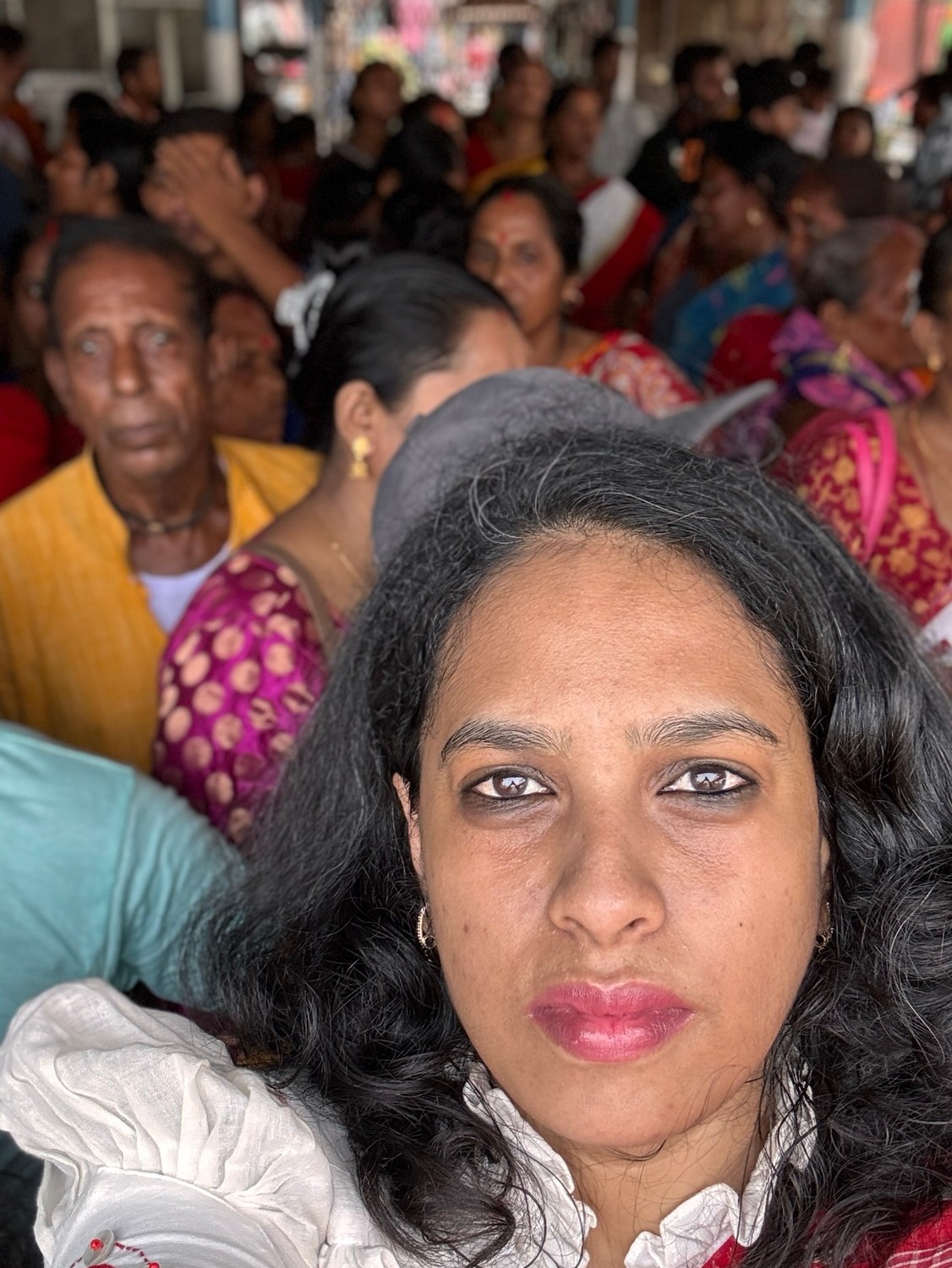
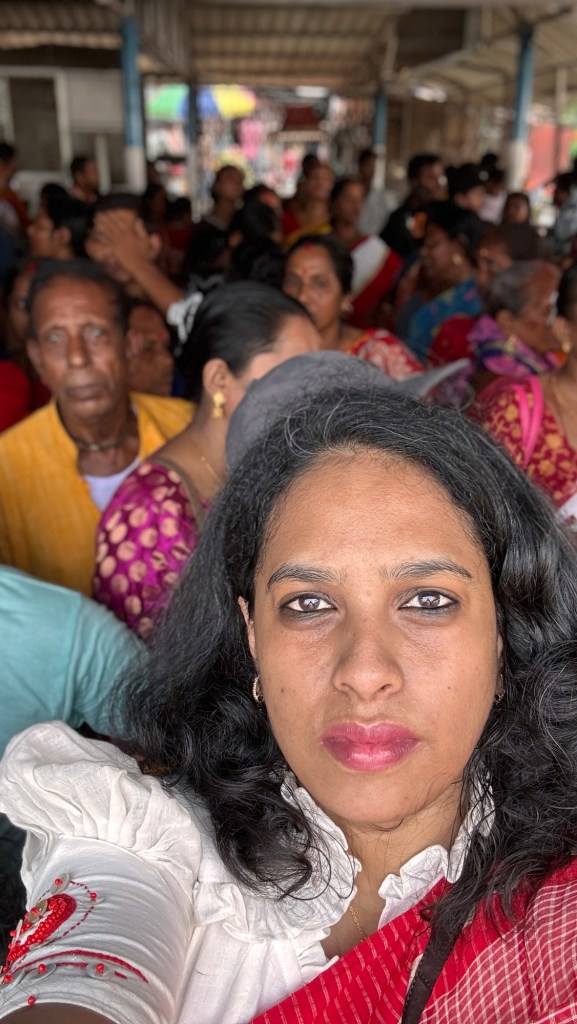
Between these two visions of Durga’s trident and Gandhi’s charkha, lies a continuum of human evolution. And it is here that I find myself on the banks of the Hooghly on Mahalaya, draped in a Gamacha saree, waiting along with many devotees for the ferry to carry us from Dakshineswar Temple, where Kali resides, to Belur Math, where her most devoted seeker, Ramakrishna Paramahansa is revered.
Ramakrishna was able to distill the tenderness of Maa Kali who otherwise is perceived to be fierce. In his surrender to Kali, he did not seek her annihilating power but her transforming love.

Perhaps that is the thread connecting Durga and Gandhi – the recognition that the real triumph is not only in ridding the world of evil but in evolving the world so that evil cannot take root again.
 Aishwarya Omprakash